

Medical aesthetic treatments are a high-demand skincare option that many clients seek when topical cosmetics hit a plateau. When clients struggle with uneven skin tone, sunspots, and facial telangiectasia, professional dermatologists routinely recommend photofacial as the premier beginner-friendly treatment.
Photofacial delivers comprehensive skin rejuvenation with virtually zero social downtime. However, clinical outcomes depend directly on choosing between broad-spectrum IPL and narrow-spectrum DPL technologies, precision parameter calibration, and advanced contact cooling.
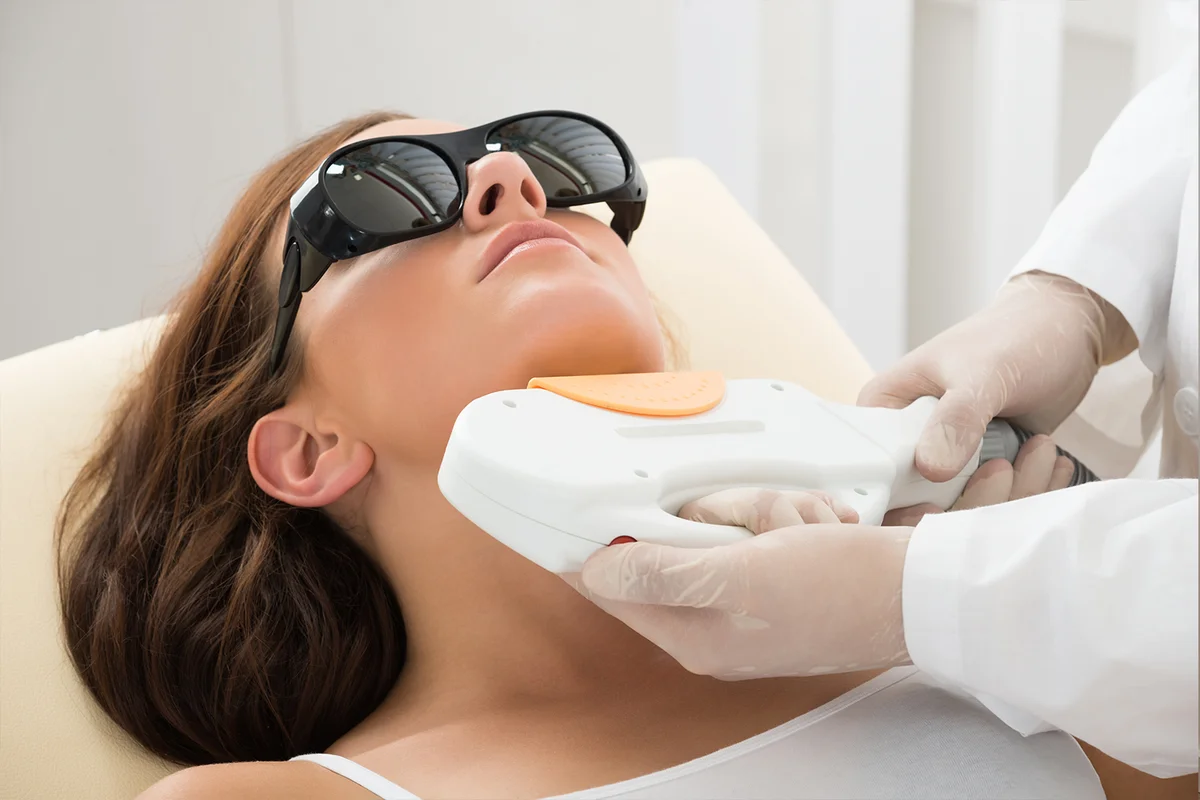
Figure 1. HuaMei Medical-Grade DPL/IPL Photorejuvenation Workstation featuring narrow-spectrum light delivery, interchangeable sapphire filters, and continuous contact cooling.
Photofacial vs. Conventional Laser: The Short Answer
1. What Exactly Is Photofacial & DPL Technology?
Unlike single-wavelength lasers, traditional Intense Pulsed Light (IPL) delivers a broad composite spectrum ranging from 500nm to 1200nm. HuaMei’s advanced Dye Pulsed Light (DPL) refines this technology by compressing the spectrum into a targeted 500–600nm narrow band that precisely matches the absorption peaks of oxyhemoglobin and superficial melanin. The system operates via two biological pathways: Selective Photothermolysis (coagulating dilated capillaries and shattering melanin without damaging surrounding skin) and Biostimulation (mild thermal energy stimulating dermal fibroblasts to generate new collagen and elastin fibers).
- Broad-Spectrum IPL: Multi-purpose aesthetic platform covering general skin conditioning, mild pigment clearance, and hair reduction.
- Narrow-Spectrum DPL: Concentrated optical energy delivering rapid clearance for vascular redness, rosacea, and superficial freckles with lower overall thermal load.
- Clinical Versatility: Multi-filter configurations allow clinics to treat diverse indications with one compact console.
2. Why Spectrum Precision Matters in Vascular & Pigment Treatments
Photofacial delivers light energy to targeted chromophores in the skin. The narrower the spectral band around 500–600nm, the higher the optical absorption in oxyhemoglobin and melanin, allowing operators to achieve endpoints with lower fluences and reduced patient discomfort.
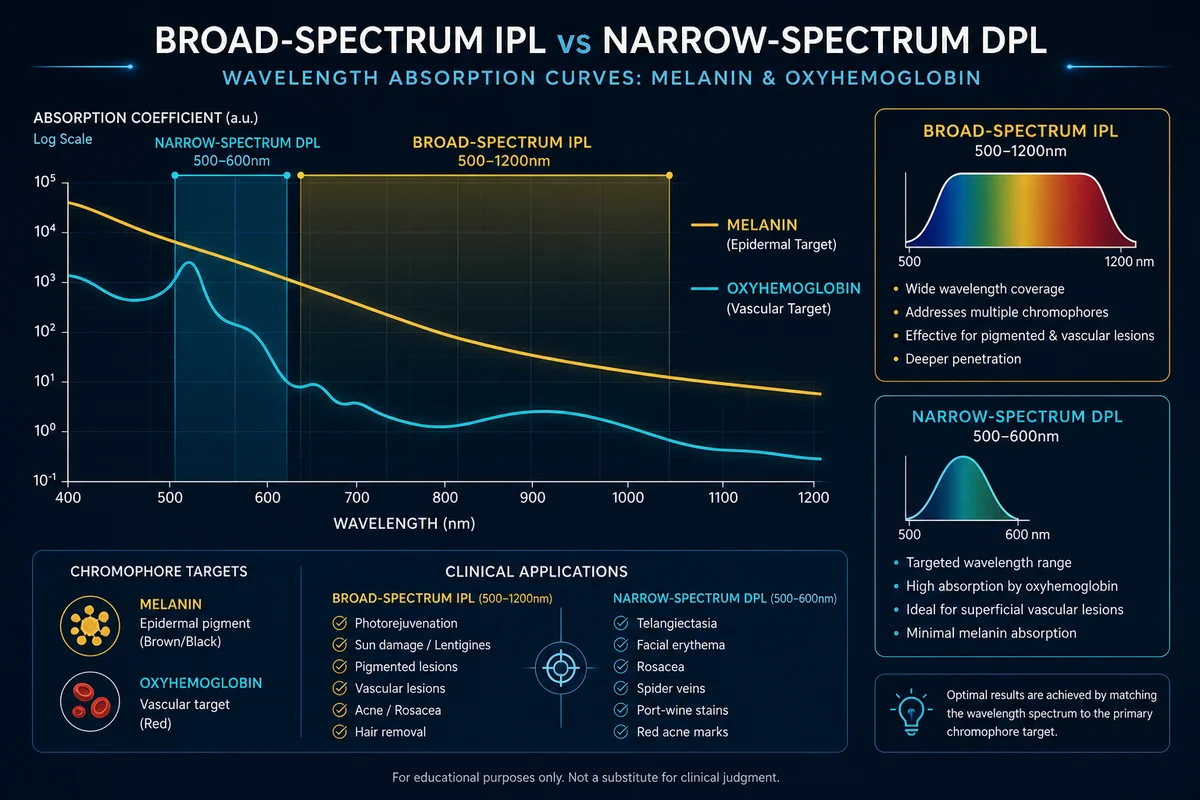
Figure 2. Comparative absorption spectrum chart: Narrow-Spectrum DPL (500–600nm) concentrates optical energy around key hemoglobin and melanin peaks compared to Broad-Spectrum IPL.
DPL technology enables clinics to effectively target facial flushing, spider angiomas, post-acne erythema, and epidermal freckles. HuaMei systems integrate real-time contact sapphire cooling to ensure patient safety and comfort across repeated scanning passes.
3. Safety Protocols & Preventing Post-Inflammatory Darkening
Professional photofacial procedures require strict temperature management to prevent epidermal overheating. Continuous contact cooling protects the epidermis, eliminating concerns about skin thinning and stabilizing the skin barrier through collagen stimulation. When treating darker skin tones or patients with recent sun exposure, calibrated pulse width and sub-pulse delay settings prevent excessive melanin heating, keeping the risk of transient post-inflammatory hyperpigmentation (PIH) to an absolute minimum.
4. How Aesthetic Clinics Should Position Photofacial in Their Menu
- Position as the entry-level photoelectric service: High safety and zero downtime make it the ideal treatment to convert first-time skincare clients.
- Package into 3 to 5 session treatment courses: Promote monthly maintenance sessions (spaced 3–4 weeks apart) to build predictable recurring revenue.
- Bundle with soothing post-treatment protocols: Pair with LED phototherapy or medical hydrating masks for enhanced skin barrier recovery.
- For equipment distributors: Focus on multi-filter versatility, reliable German xenon flash lamps, and stable cooling performance.
5. A Practical Buyer Checklist for Photofacial Equipment
-
Filter spectrum options (DPL 500–600nm vascular, 550–650nm pigment, 640–1200nm hair reduction).
-
Xenon lamp lifespan and energy consistency across over 1,000,000 pulses.
-
Sapphire contact cooling temperature stability (-4°C to 0°C).
-
Smart touch-screen interface with clinical presets for Fitzpatrick skin types I–V.
-
CE medical certification and international safety documentation.
Shandong Huamei Technology Co., Ltd. has over 20 years of direct manufacturing experience, 60+ international certifications, 380+ patents, and partners across 150+ countries, offering full OEM/ODM customization from 1 unit.
Suggested CTA
Looking to upgrade your aesthetic clinic or salon with a high-performance DPL/IPL photorejuvenation platform? Explore HuaMei’s DPL systems and contact our clinical team for customized configurations and factory-direct pricing.